
A Structured Apporach to Holistic Developement
At Aster, we believe in learning by doing. Our focus is on developing multiple intelligences at analytical, practical, creative and emotional levels. Through continuous critical thinking, students enhance their problem-solving capabilities and develop essential life skills.
Discover new ideas
through experiences
Develop analytical
and critical thinking
Learn through activities
and practical work
Express ideas through
creativity and innovation
Build confidence
and life skills
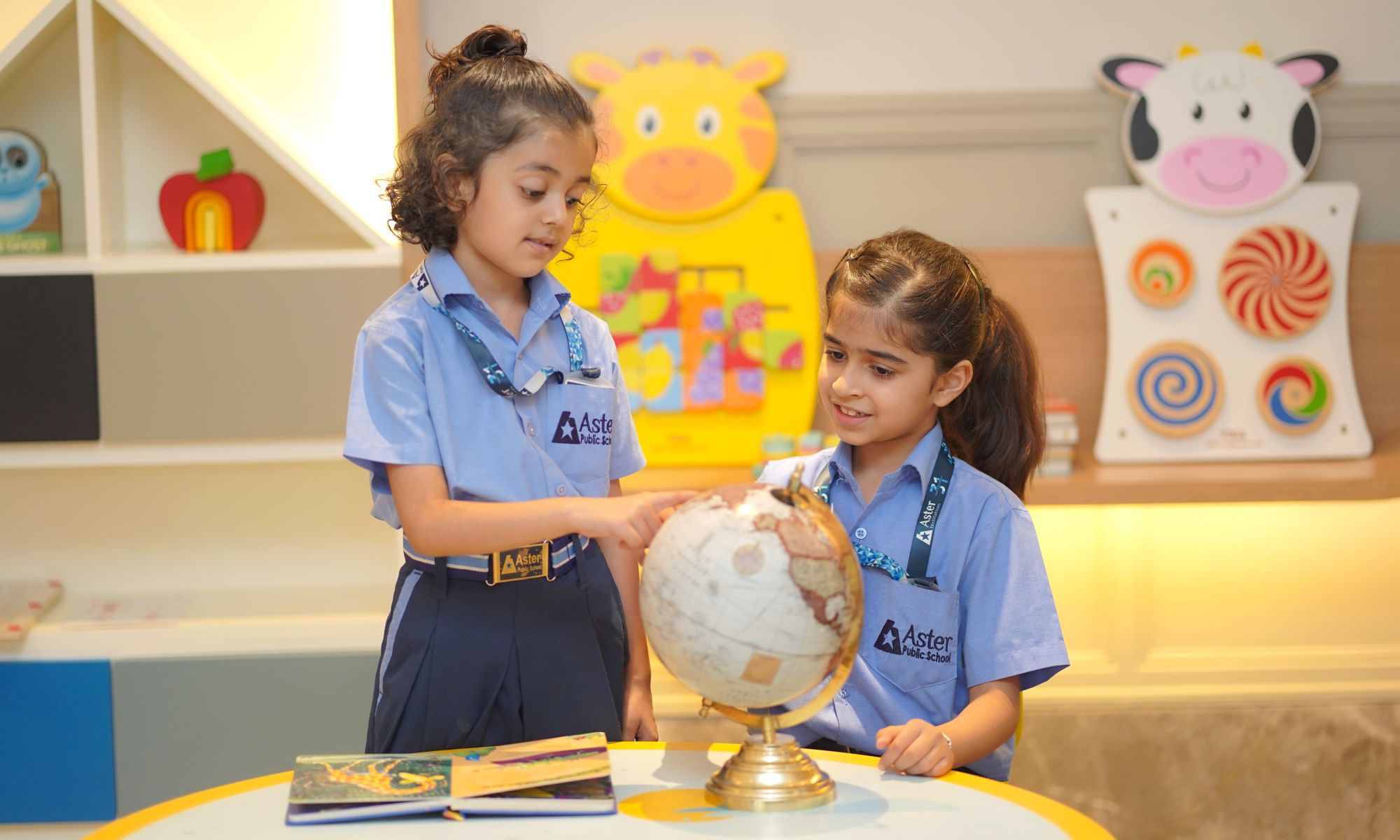
Focus on developing analytical, practical, creative and emotional abilities. Students go through a continuous process of critical thinking, helping them enhance their problem-solving capabilities.
A variety of teaching-learning methodologies, integrated with technology, are used to provide students with a holistic education and meaningful learning experiences.
Integrated learning and art integration are followed as part of the approach recommended under the National Education Policy, encouraging creativity and practical understanding.
Equal importance is given to curricular and co-curricular activities such as sports, field trips, excursions, community service, life skills, fine arts, environmental sensitivity, languages and technology.
Our curriculum is divided into six broad stages, providing a structured learning journey that supports students' academic, physical, social and emotional development at every age.
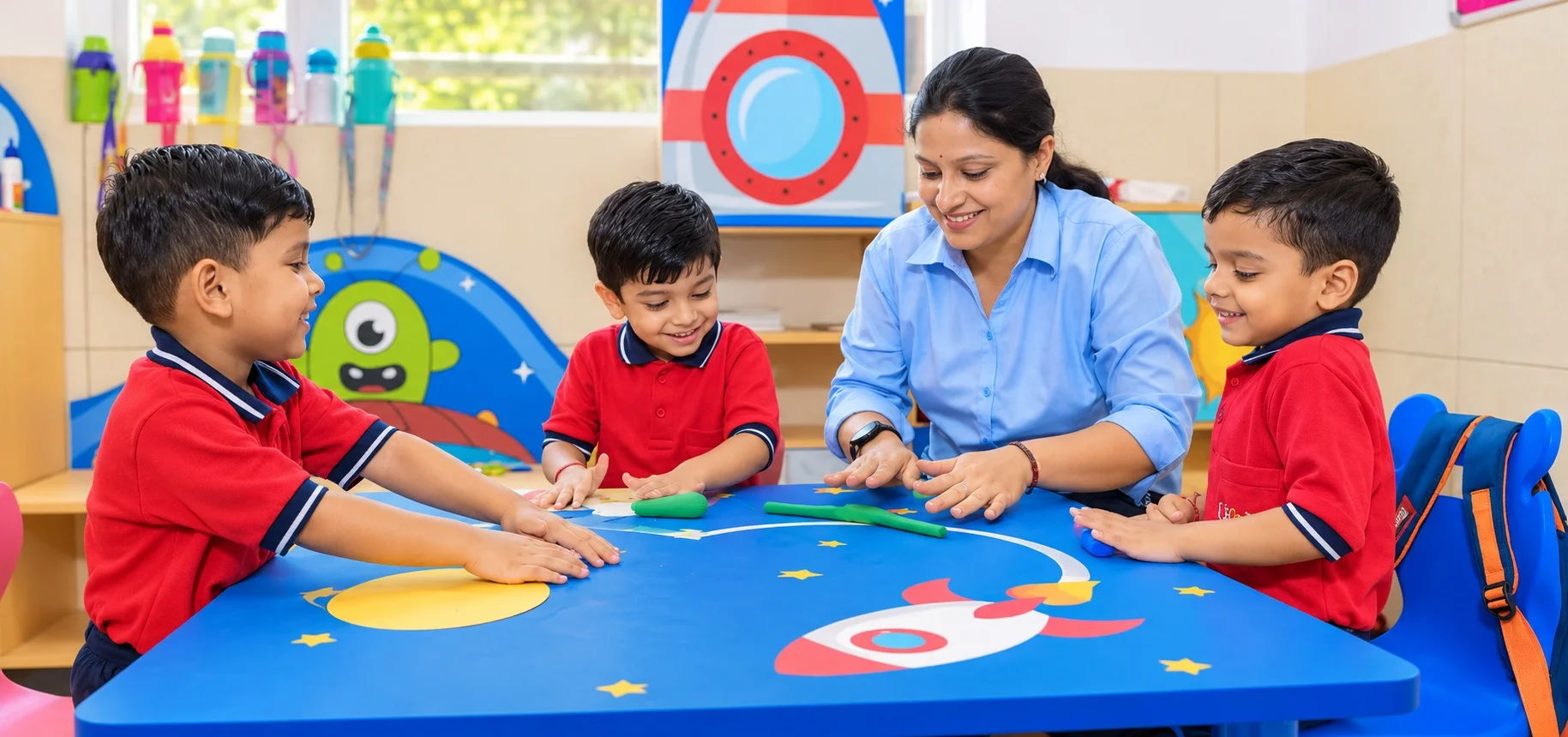
Children are provided with a social environment through informal play-way activities such as playing, singing, dancing, making friends, sharing, caring and conversing with each other. They learn to express their needs, develop emotional stability and practise manners and etiquettes. This stage gradually helps children move away from parental dependency. Motor skills are developed, promoting cognitive, speech and sensory development.
This is a preparatory stage towards the formal education system introduced at Class I. The Montessori method supports the mental, physical, social and emotional development of children. Through play-way activities, games, art and craft, singing and dancing, children develop social, language, physical and motor skills, creative expression and cognitive abilities, preparing them for a formal school environment.
The main focus is on building core basic skills and competencies in English and Hindi, Arithmetic and Environmental Sciences, including Social and General Science. A third language, such as Sanskrit or French, is introduced in Class V. Co-curricular activities, including compulsory art and craft, music, dance, physical education, games, library and computer education, are part of the regular timetable. Students participate through hands-on experiences, with art integration being introduced and followed as an important part of learning.
The aim is to develop core basic skills and competencies, with emphasis on learning by doing and developing creative thinking. Students take a compulsory course in six essential subjects, including four languages (Hindi, English, French and Sanskrit), Mathematics (Arithmetic, Algebra and Geometry), Social and Environmental Sciences (History, Geography, Civics and Economics), and Science and Technology. Computer, Music, Art and Sports are also taught to ensure students' overall development.
The aim is to ensure the all-round development of students in accordance with a holistic approach to education. Students are provided with a broad and balanced understanding of languages (English, Hindi, Sanskrit and French), Mathematics, Science, Social Science, Information Technology and Physical Education. The learner-centred curriculum provides skill-building opportunities from both scholastic and co-scholastic perspectives. Critical thinking enhances problem-solving abilities, encourages creativity and helps students develop greater competence.
The aim is to provide ample opportunities for physical, intellectual and social development while nurturing essential life skills. Curricular and co-curricular activities are prescribed to help improve self-esteem and develop empathy towards different cultures. The curriculum encompasses three major learning areas: Science (Medical and Non-Medical), Commerce and Humanities.
The following subjects are offered to students based on their selected stream: